The Science of Shine: Exploring Ceramic Coating Chemical Composition
When you run your hand across a freshly coated vehicle, feeling that glass-like smoothness, you're not just touching a layer of protection. You're experiencing advanced chemistry at work. Ceramic coating represents a quantum leap from the days of Carnauba wax and polymer sealants. Rather than sitting on top of your paint like a temporary shield, ceramic coating is a liquid polymer that chemically bonds to your vehicle's factory paint, creating a permanent or semi-permanent layer of protection through molecular fusion.
Understanding the chemical composition of
ceramic coating isn't just academic curiosity. It's the key to appreciating why this technology delivers years of protection where traditional products measure their lifespan in weeks or months.
The Core Element: Silicon Dioxide (SiO₂)
At the heart of nearly every professional-grade ceramic coating lies silicon dioxide, commonly known as SiO₂. This is the same compound found in quartz crystals and beach sand, but don't let its humble origins fool you. When processed into nanoparticles and suspended in a specialized carrier solution, SiO₂ becomes the backbone of automotive protection technology.
The science behind this transformation is fascinating. Your vehicle's clear coat, while appearing smooth to the naked eye, is actually riddled with microscopic pores and imperfections at the nanoscale level (we're talking dimensions measured at 10⁻⁹ meters). When ceramic coating is applied, these SiO₂ nanoparticles fill these microscopic valleys, creating an incredibly smooth and dense surface structure.
But here's where it gets interesting: the concentration and quality of SiO₂ directly determines the coating's performance characteristics. Higher concentrations generally mean harder surfaces and better water-beading properties, but there's a critical balance to strike. Too much SiO₂ creates a brittle coating that can crack under thermal stress as your vehicle's paint expands and contracts with temperature changes. This is where formulation expertise becomes crucial, and where brands like Tekshine differentiate themselves through years of research and development.
The Secret Sauce: Carrier Solvents & Additives
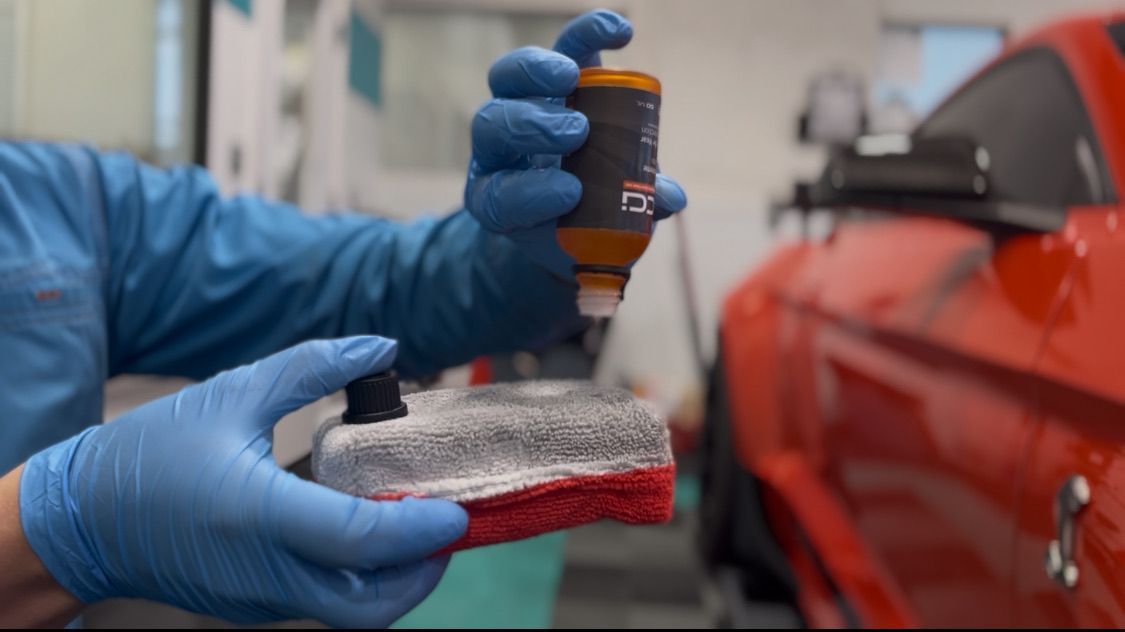
If SiO₂ is the star of the show, carrier solvents and additives are the supporting cast that makes the performance possible. When you open a bottle of ceramic coating, you're holding a carefully engineered suspension. The SiO₂ and other active ingredients need to remain liquid and workable during application, yet transform into a rock-hard protective layer once cured.
Carrier solvents serve this exact purpose. These volatile organic compounds keep the coating in its liquid state, allowing it to spread evenly across your paint surface. During what chemists call the "flash point," these solvents begin to evaporate, leaving behind the active protective ingredients. This evaporation process is time-sensitive and temperature-dependent, which is why professional installers are so particular about application conditions.
Beyond the basic formula, premium ceramic coatings incorporate strategic additives. Titanium dioxide (TiO₂), for instance, serves dual purposes: it enhances the coating's hardness rating while providing additional UV protection by scattering and absorbing ultraviolet radiation before it can degrade your vehicle's paint pigments. Think of it as sunscreen for your car, working at the molecular level.
Other additives fine-tune properties like leveling (how smoothly the coating spreads), surface tension (affecting application ease), and curing speed. The exact ratios and combinations of these components represent the proprietary formulations that distinguish professional-grade products from consumer alternatives. Tekshine's formulation team carefully balances these additives to create a coating that's both installer-friendly and exceptionally durable.
The Bonding Process: Covalent vs. Mechanical
Here's the fundamental difference between ceramic coating and every product that came before it: the nature of the bond it forms with your paint.
Traditional waxes and sealants rely on mechanical bonding. They sit on top of your clear coat, filling imperfections and creating a smooth surface through physical adhesion alone. When you wash your car or expose it to the elements, these products gradually wear away because they're not truly attached to the paint. They're just resting on it.
Ceramic coatings operate on an entirely different principle: covalent bonding. During the curing process, which can take anywhere from 24 hours to several weeks depending on environmental conditions, something remarkable happens at the molecular level. The coating doesn't just stick to your paint. It shares electrons with the paint molecules themselves, creating a chemical bond that becomes part of the surface structure.
This is why ceramic coatings don't simply "wash off." You're not removing a layer of product; you'd be breaking chemical bonds. The coating and your clear coat have essentially fused into a single, unified protective system. It's this covalent bonding that gives ceramic coatings their legendary durability, lasting years rather than weeks.
The process also involves cross-linking, where individual polymer chains within the coating connect to one another, creating a three-dimensional network of molecular bonds. Imagine a chain-link fence becoming increasingly interconnected until it's more like a solid sheet. That's cross-linking in action, and it's what gives the cured coating its exceptional hardness and chemical resistance.
The Tekshine Advantage: Precision Engineering
At Tekshine, we've invested countless hours perfecting the delicate balance that separates good ceramic coatings from exceptional ones. Our formulation philosophy centers on one core principle: protection shouldn't come at the expense of practicality.
The challenge with ceramic coating chemistry is that the properties that make it protective can also make it problematic if not carefully controlled. A coating with excessive SiO₂ concentration might achieve impressive hardness ratings, even reaching the coveted 9H rating on the pencil hardness scale. However, if it lacks the flexibility to accommodate thermal expansion, it will eventually crack or delaminate.
Tekshine's engineering team has optimized the SiO₂ ratio to deliver that 9H hardness while maintaining the elasticity needed for real-world performance. Your vehicle's paint expands when hot and contracts when cold; our coating flexes with these changes rather than fighting against them. We've also calibrated our carrier solvent system to provide an adequate working time for proper application without extending cure times unnecessarily.
This precision engineering extends to our additive package. Our formulation includes carefully selected compounds that enhance UV stability, improve resistance to water spotting, and optimize the hydrophobic properties that make water bead and sheet off treated surfaces. Every component serves a specific purpose, and nothing is included simply for marketing appeal.
What sets Tekshine apart is our commitment to transparency and education. We believe that when customers understand the chemistry behind our products, they can make informed decisions and achieve better results. This is why we invest heavily in both product development and customer education, ensuring that every bottle of Tekshine ceramic coating comes with the knowledge needed to maximize its performance.
Resulting Properties: Why the Chemistry Matters
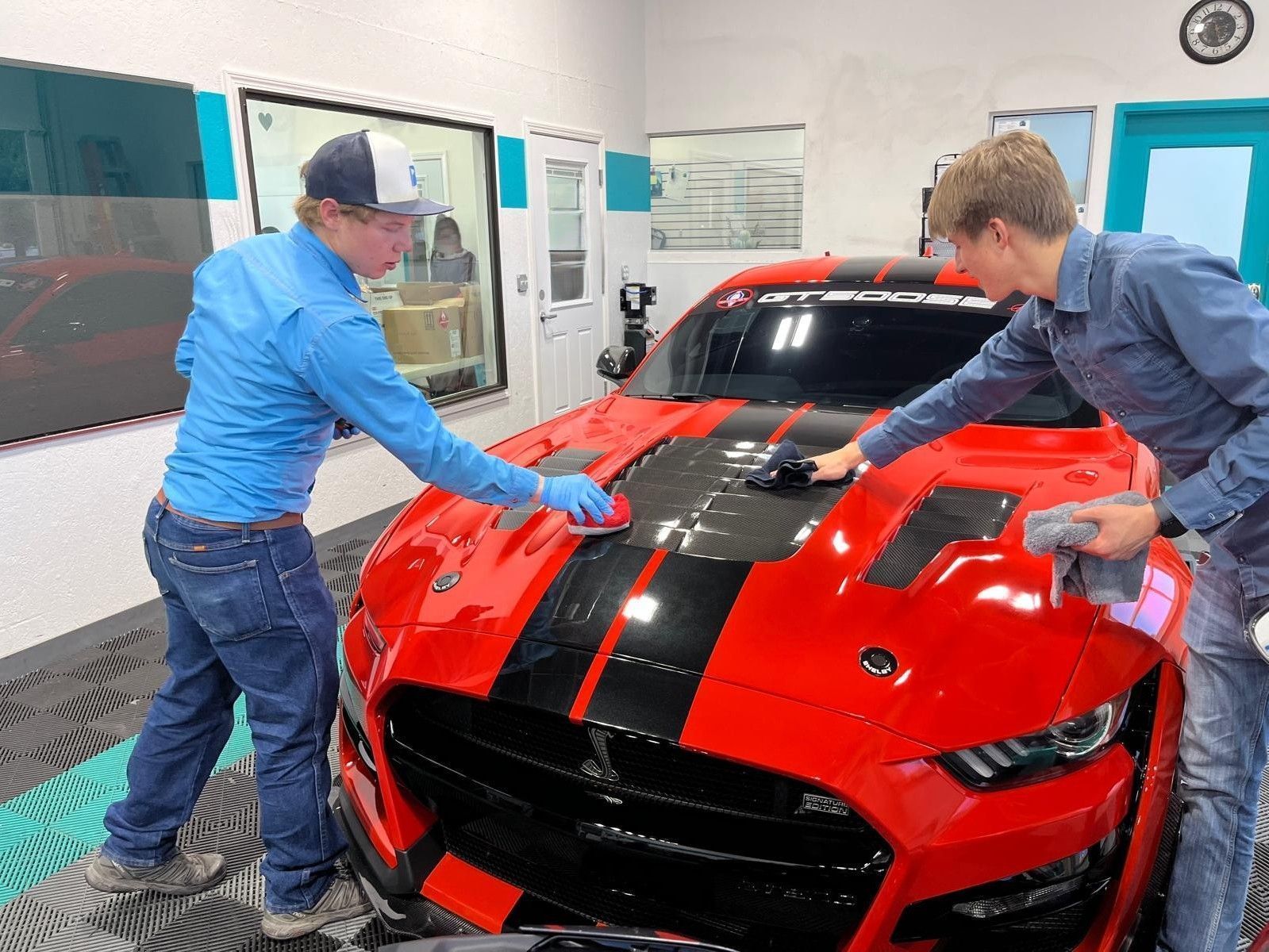
Understanding ceramic coating chemistry isn't just about appreciating the science. It's about recognizing how molecular-level engineering translates into real-world benefits for your vehicle.
Hydrophobicity is perhaps the most immediately visible result of ceramic coating chemistry. The molecular structure of cured SiO₂ creates an ultra-smooth surface with minimal surface energy, causing water to form into tight beads with contact angles often exceeding 110 degrees. This isn't just aesthetically pleasing; it means water, dirt, and contaminants struggle to adhere to the surface, making your vehicle easier to clean and reducing the accumulation of grime between washes.
Oleophobicity extends this protection to oils and organic compounds. Bug splatter, tree sap, and road tar (substances that would normally bond tenaciously to bare clear coat) have difficulty adhering to the low-energy surface created by the ceramic coating. When they do make contact, they're far easier to remove without aggressive scrubbing that could mar your paint.
Chemical resistance is where the sacrificial layer concept becomes critical. Your ceramic coating acts as a buffer between environmental contaminants and your vehicle's paint. Acidic bird droppings, alkaline cleaning chemicals, and industrial fallout all attack the coating first. Because the coating is harder and more chemically stable than your clear coat, it withstands these assaults far better than bare paint would. Even when the coating does eventually show signs of degradation after years of service, it's taken the damage so your paint doesn't have to. That's the sacrificial layer principle in action.
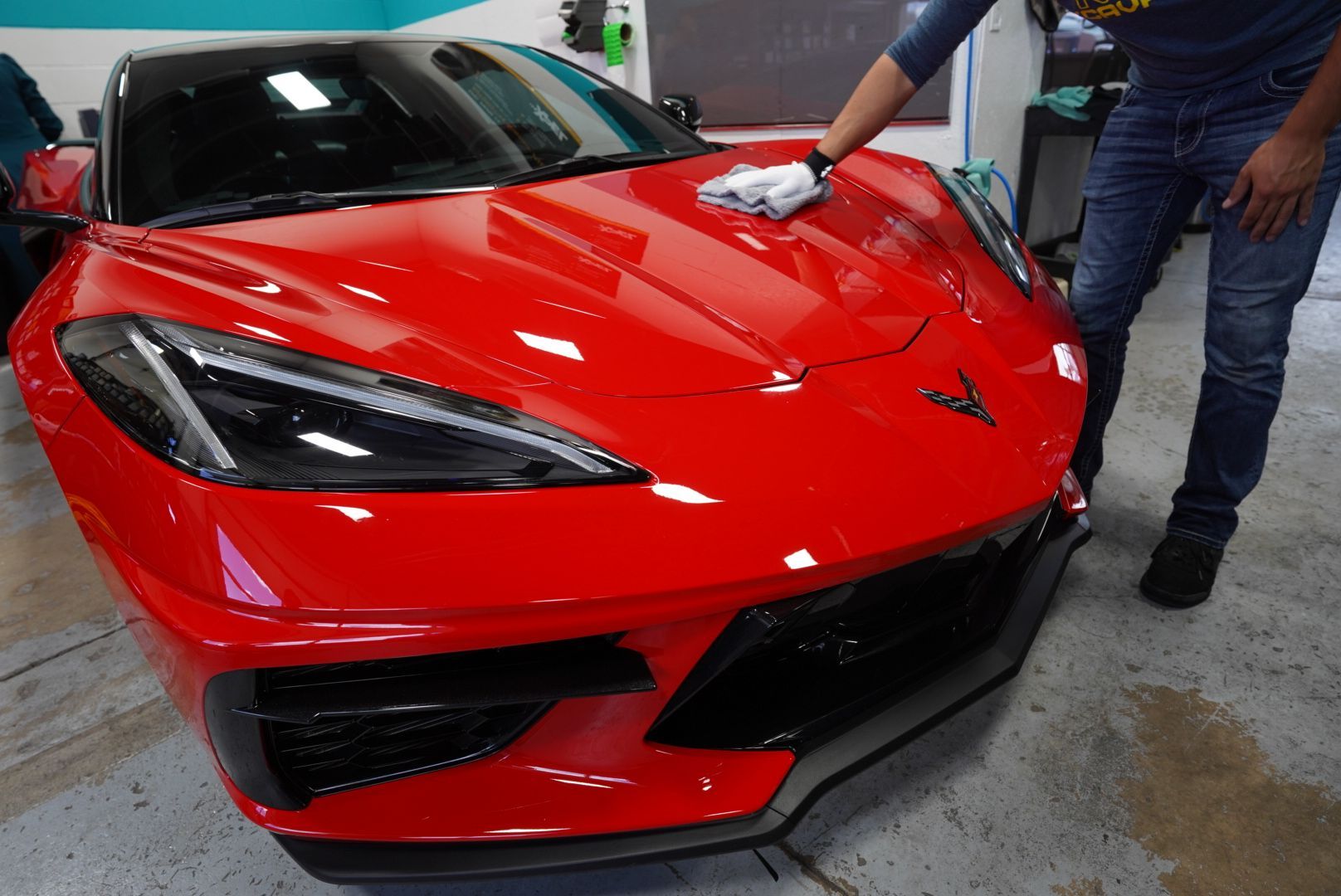
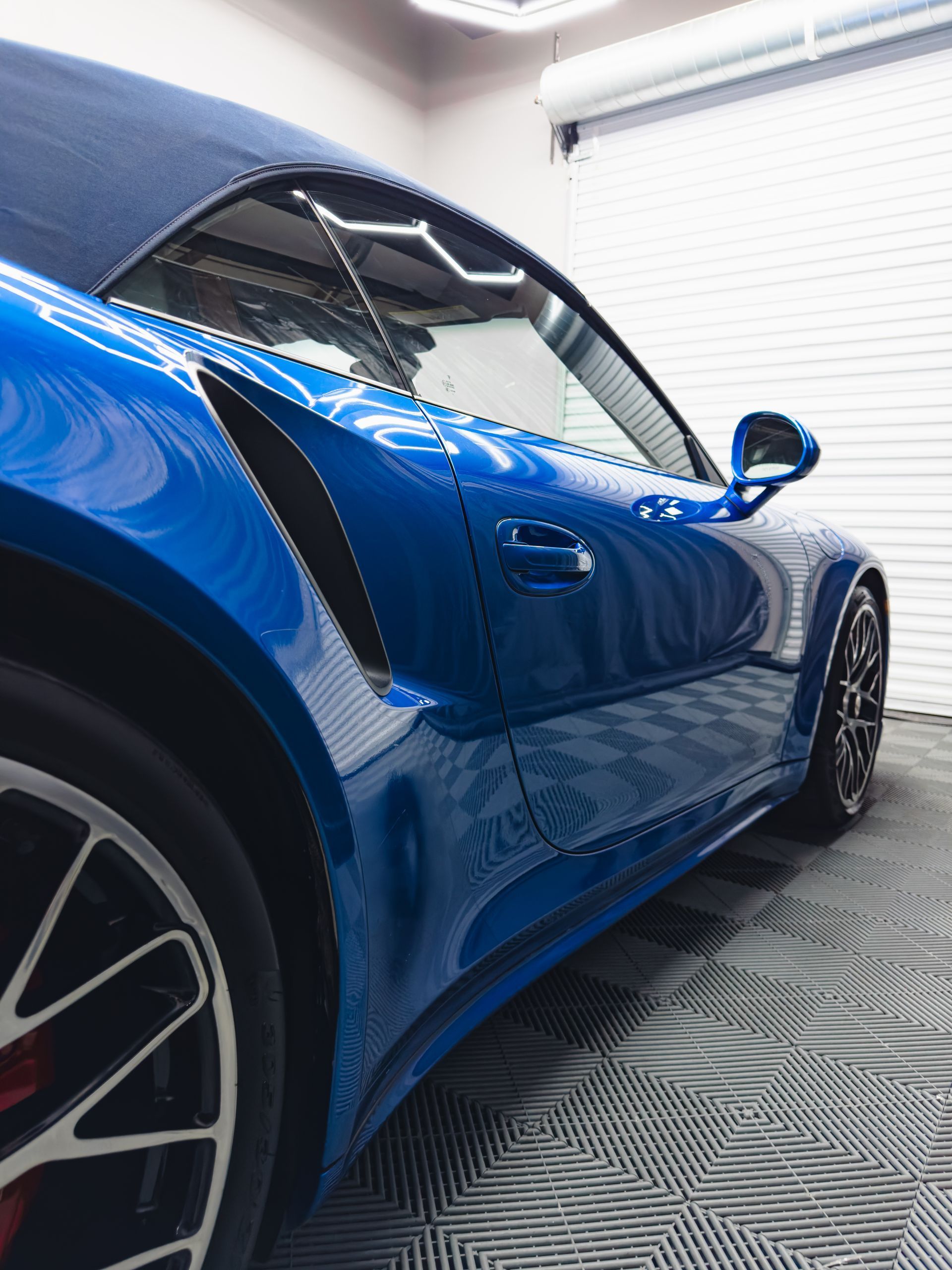
The nanoscale smoothness also contributes to the intense gloss and depth that ceramic coatings are famous for. By creating a perfectly level surface at the microscopic level, the coating allows light to reflect more uniformly, enhancing the visual depth and clarity of your paint's color. This is the signature "wet look" that Tekshine-coated vehicles are known for, a visual testament to the molecular precision happening beneath the surface.
The Bottom Line
The chemical composition of ceramic coating represents the convergence of materials science, nanotechnology, and automotive engineering. From the SiO₂ nanoparticles that form the protective matrix to the carefully selected carrier solvents that enable proper application, every component plays a role in creating a coating that can withstand years of environmental assault.
Understanding this chemistry helps explain why not all ceramic coatings are created equal. The difference between a product that delivers years of protection and one that fails prematurely often comes down to formulation expertise: the precise ratios of active ingredients, the quality of raw materials, and the engineering that balances competing performance demands.
When you choose a ceramic coating, you're not just buying a bottle of liquid. You're investing in advanced chemistry that will bond with your paint at the molecular level, creating a protective system that represents the pinnacle of automotive surface protection technology.
Final Thoughts
The journey from understanding ceramic coating chemistry to experiencing its benefits on your vehicle transforms how you think about automotive care. What once seemed like magic—water beading off your paint, contaminants refusing to stick, your finish maintaining that showroom shine month after month—is actually the result of deliberate chemical engineering at the nanoscale level.
At Tekshine, we believe that educated customers are empowered customers. When you understand that you're applying a product that forms covalent bonds with your paint, undergoes cross-linking to create a three-dimensional protective network, and leverages the unique properties of SiO₂ nanoparticles, you approach the application process with the care and precision it deserves. You're not just adding a protective layer; you're initiating a chemical transformation that will safeguard your investment for years to come.
The automotive detailing industry has evolved dramatically over the past decade, moving from simple waxes to sophisticated nanotechnology-based solutions. Tekshine has been at the forefront of this evolution, continuously refining our formulations to deliver coatings that don't just meet industry standards but set new benchmarks for performance, durability, and ease of application.
Whether you're a professional detailer looking to offer your clients the best protection available or an enthusiast who takes pride in maintaining your vehicle to the highest standards, understanding the chemical composition of ceramic coating gives you the insight needed to make informed decisions. The science is complex, but the results speak for themselves: a finish that stays cleaner longer, resists environmental damage more effectively, and maintains its beauty with minimal maintenance.
As you consider ceramic coating for your vehicle, remember that you're not just choosing a product. You're choosing a chemical partnership between advanced polymer science and your vehicle's paint. Make sure that the partnership is built on a foundation of quality ingredients, precise formulation, and a manufacturer that stands behind the science.
Tekshine is committed to that standard, and to helping you protect what matters most: your vehicle, your investment, and your pride in ownership.
TekShine PPF, Ceramic Coating and Window Tinting