Can Decontamination Treatments Restore a Ceramic Coating’s Performance?
A ceramic coating is designed to protect your vehicle’s paint while providing a glossy finish, easier maintenance, and strong water-repelling properties. However, over time, many vehicle owners notice that their coating does not seem to perform the same way it did when it was first applied. Water may not bead as tightly, the surface may feel less slick, and the finish may appear less vibrant.
In many cases, this does not mean the ceramic coating has failed. Instead, contaminants may have built up on the surface and are preventing the coating from performing properly.
A ceramic coating decontamination treatment can often restore lost performance by removing bonded contaminants that block the coating’s hydrophobic properties. While decontamination cannot rebuild a worn coating or repair damage, it can help restore gloss, slickness, and water beading when contamination is the cause of reduced performance.
For vehicles driven in areas like Cedar City, St. George, Hurricane, Richfield, and throughout Southern Utah, environmental exposure can contribute to contamination buildup over time. Understanding how decontamination works can help vehicle owners protect their ceramic coating investment.
Why Ceramic Coatings Lose Performance Over Time
Ceramic coatings create a protective layer over your vehicle’s paint that helps resist dirt, water, and environmental contaminants. The hydrophobic properties of a ceramic coating allow water to bead and roll away while making routine washing easier.
However, ceramic coatings are not completely maintenance-free. Daily driving exposes your vehicle to a variety of contaminants that can attach to the surface and reduce the coating’s effectiveness.
When contaminants accumulate, they create a layer between the coating and the environment. Water may begin interacting with the buildup instead of the ceramic coating itself. This can lead to:
- Reduced water beading
- Less noticeable hydrophobic performance
- A rougher surface texture
- Reduced gloss and clarity
- Increased difficulty removing dirt during washes
A ceramic coating that appears to be losing performance may simply need proper ceramic coating maintenance rather than replacement.

Common Contaminants That Affect Ceramic Coating Performance
Vehicles are constantly exposed to environmental contaminants that can bond to the surface. In Southern Utah, factors such as dry conditions, road debris, dust, and mineral deposits can contribute to buildup.
Some of the most common contaminants found on ceramic-coated vehicles include:
Iron Fallout
Iron particles from brake dust, industrial sources, and road debris can become embedded into the surface. These contaminants may feel rough when touching the paint and can appear as small orange or rust-colored spots.
Road Tar and Road Film
Tar from asphalt and road construction can stick to lower vehicle panels, behind wheels, and other high-impact areas. Road film can also create a dull appearance that affects the vehicle’s finish.
Hard Water Spots
Mineral deposits left behind after water evaporates can affect the appearance and performance of a ceramic coating. Sprinklers, washing in direct sunlight, and untreated water exposure can contribute to water spot buildup.
Tree Sap, Bird Droppings, and Bug Residue
Organic contaminants can become difficult to remove when they remain on the vehicle for extended periods, especially in warm conditions. Prompt removal helps reduce the risk of staining or surface damage.
How Ceramic Coating Decontamination Works
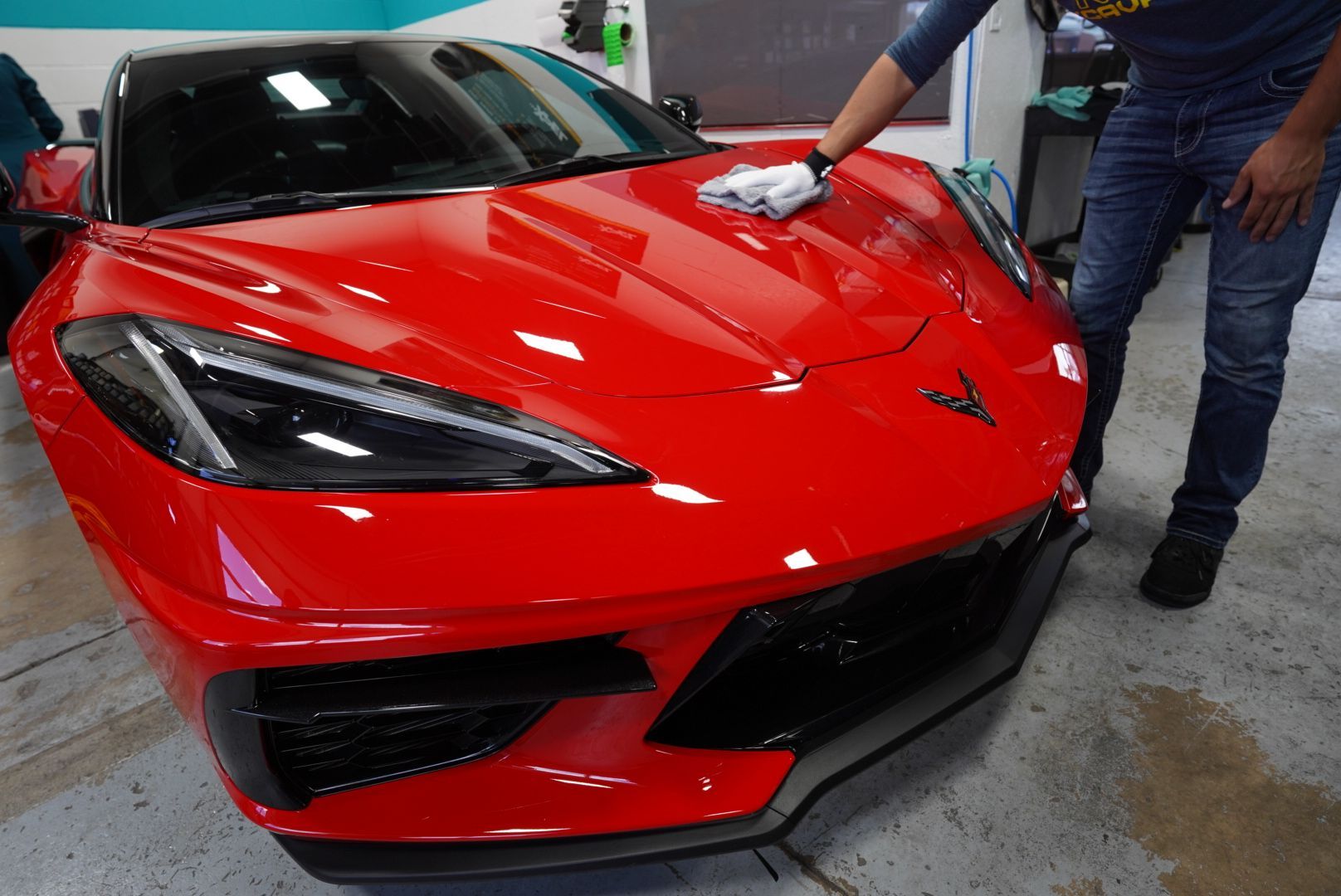
A normal maintenance wash removes loose dirt and debris, but it may not remove contaminants that have bonded to the surface. A ceramic coating decontamination treatment is designed to remove these stubborn contaminants while preserving the protective layer underneath.
There are two main types of decontamination used for ceramic-coated vehicles.
Chemical Decontamination
Chemical decontamination uses specialized products to dissolve or loosen specific contaminants.
Examples include:
- Iron removers that target bonded metal particles
- Tar removers that break down sticky asphalt residue
- Water spot treatments that help address mineral deposits
These products reduce the need for aggressive scrubbing and are often the first step in a professional ceramic coating restoration process.
Physical Decontamination
Some contaminants may remain after chemical treatment. In these cases, a clay bar or clay mitt may be used to remove embedded particles.
Physical decontamination requires care because improper technique, insufficient lubrication, or excessive pressure can create surface marks. For ceramic-coated vehicles, this step should only be performed when necessary.
A professional detailer can determine whether chemical treatment is enough or whether additional decontamination is needed.
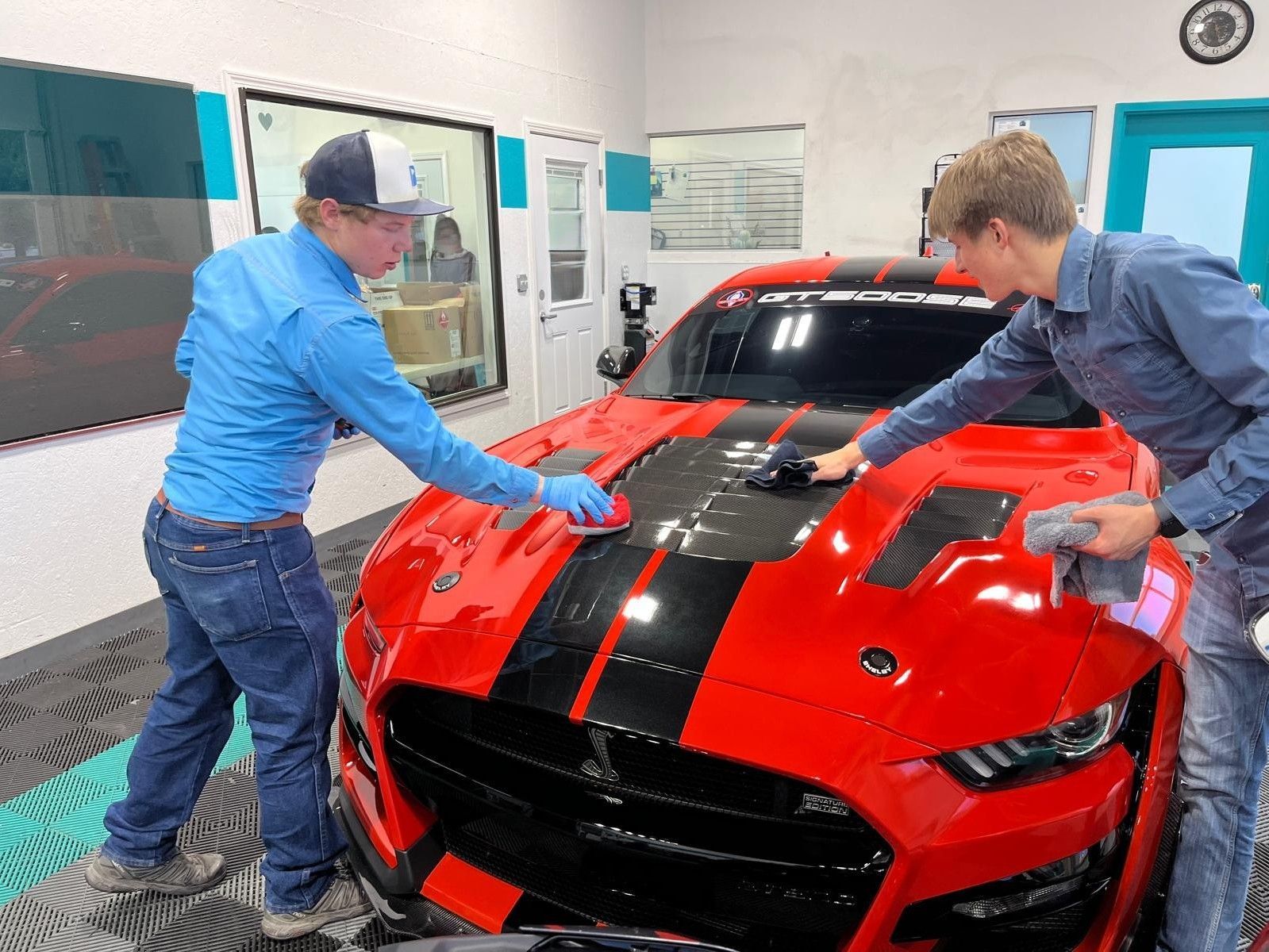

Can Decontamination Restore Ceramic Coating Performance?
In many cases, yes. When contamination is the reason a ceramic coating is not beading water or feels less slick, a proper decontamination treatment can restore much of the coating’s original performance.
A ceramic coating decontamination treatment may help:
- Remove bonded contaminants covering the coating
- Restore ceramic coating water beading
- Improve surface slickness
- Restore gloss affected by road film and buildup
- Improve the overall appearance of the vehicle
However, decontamination is a cleaning process, not a repair process.
It cannot:
- Replace ceramic coating that has worn away
- Repair scratches, etching, or paint defects
- Restore a coating that has reached the end of its expected lifespan
If the coating continues to underperform after proper cleaning and decontamination, it may require a professional inspection to determine whether maintenance, coating refresh, or reapplication is needed.
Signs Your Ceramic Coating May Need Decontamination
Many vehicle owners assume their coating has failed when they notice changes in appearance or performance. Some common signs that contamination may be affecting your ceramic coating include:
Water Is No Longer Beading Properly
One of the easiest ways to notice reduced coating performance is when water spreads across the surface instead of forming tight beads.
The Paint Feels Rough After Washing
A properly maintained ceramic coating should feel smooth and slick. A rough texture may indicate bonded contaminants.
Gloss Appears Reduced
Road grime, mineral deposits, and environmental buildup can make a coated vehicle appear less reflective.
Dirt Seems to Stick More Easily
When contaminants cover the coating, the surface may lose some of its easy-to-clean characteristics.
How to Maintain Ceramic Coating Performance
Regular ceramic coating maintenance helps prevent heavy contamination buildup and supports longer-lasting protection.
Helpful ceramic coating care tips include:
- Wash regularly with a pH-neutral shampoo
- Remove bird droppings, bug residue, and tree sap quickly
- Avoid harsh automatic car washes
- Use quality microfiber towels and wash tools
- Schedule professional maintenance when needed
Routine maintenance does not only improve appearance. It also helps protect the coating’s longevity and keeps the vehicle easier to maintain.
Professional Ceramic Coating Care at TekShine
At TekShine, we help vehicle owners throughout Cedar City and Southern Utah maintain the appearance and performance of their vehicles. Proper ceramic coating care starts with understanding what your coating needs, whether that means routine maintenance, decontamination, or additional detailing services.
TekShine installs CCI ceramic coatings ranging from 1-year protection options to our 3 to 5 Year Advance and 6 to 10 Year Revolution coatings. Our process includes proper preparation to ensure coatings are applied to a clean and properly prepared surface.
If your ceramic coating is losing gloss, not beading water like it used to, or showing signs of contamination buildup, a professional evaluation can help determine the right next step.
TekShine PPF, Ceramic Coating and Window Tinting